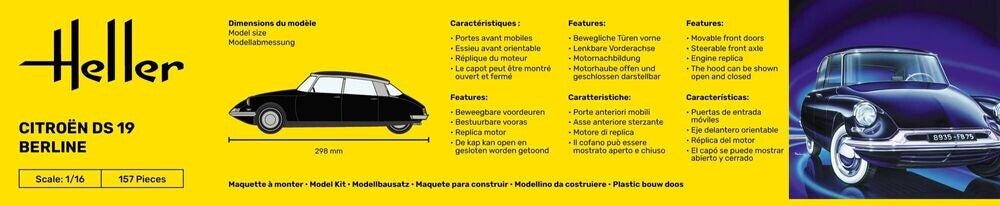
HELLER : REF : 56795 : 1:16 : FRANCE : Citroën : DS 19 Berline (1955-1975) (STARTER KIT)
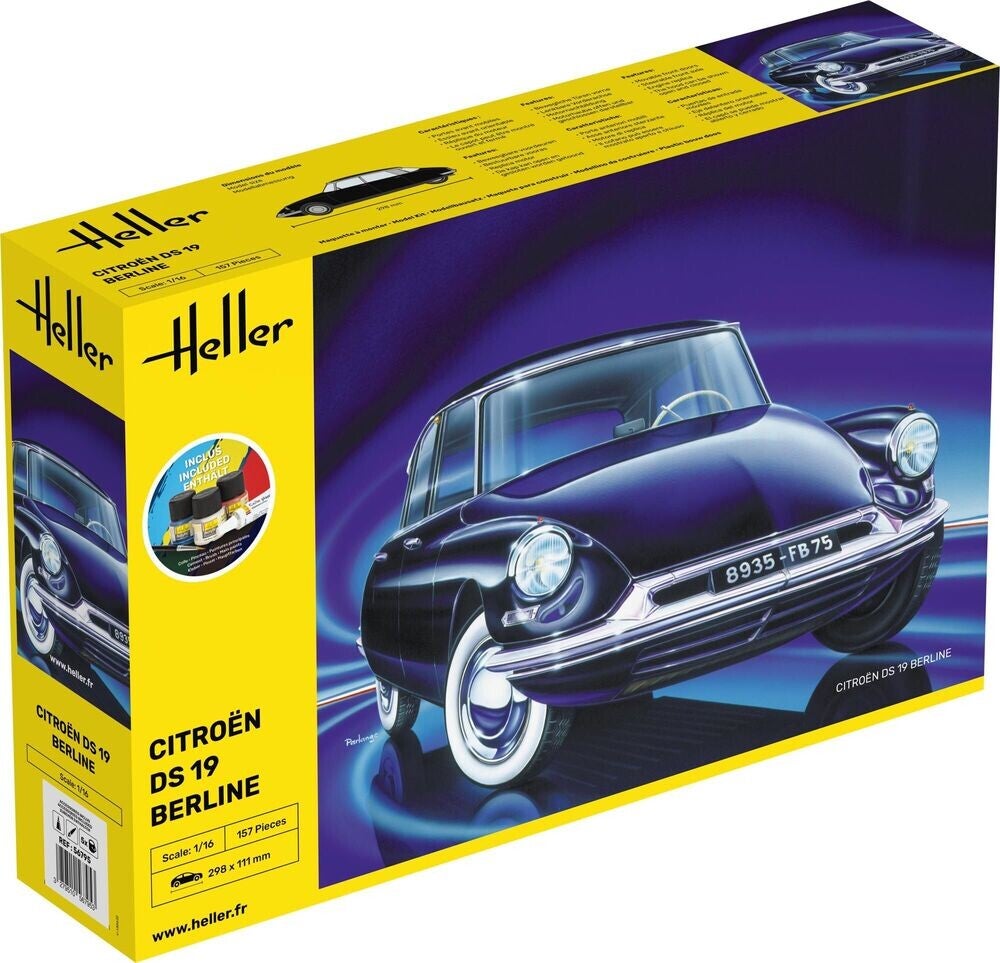




Heller REF :
56795
Manufacter :
HELLER
GTIN : 3279510567953.
Scale :
1:16
---
Product description :
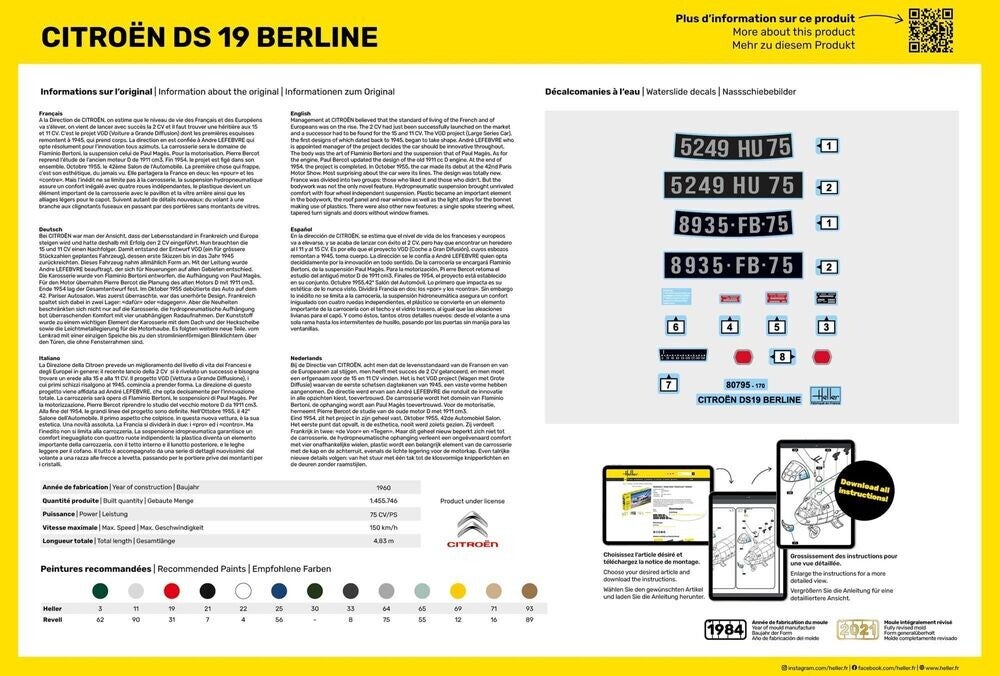
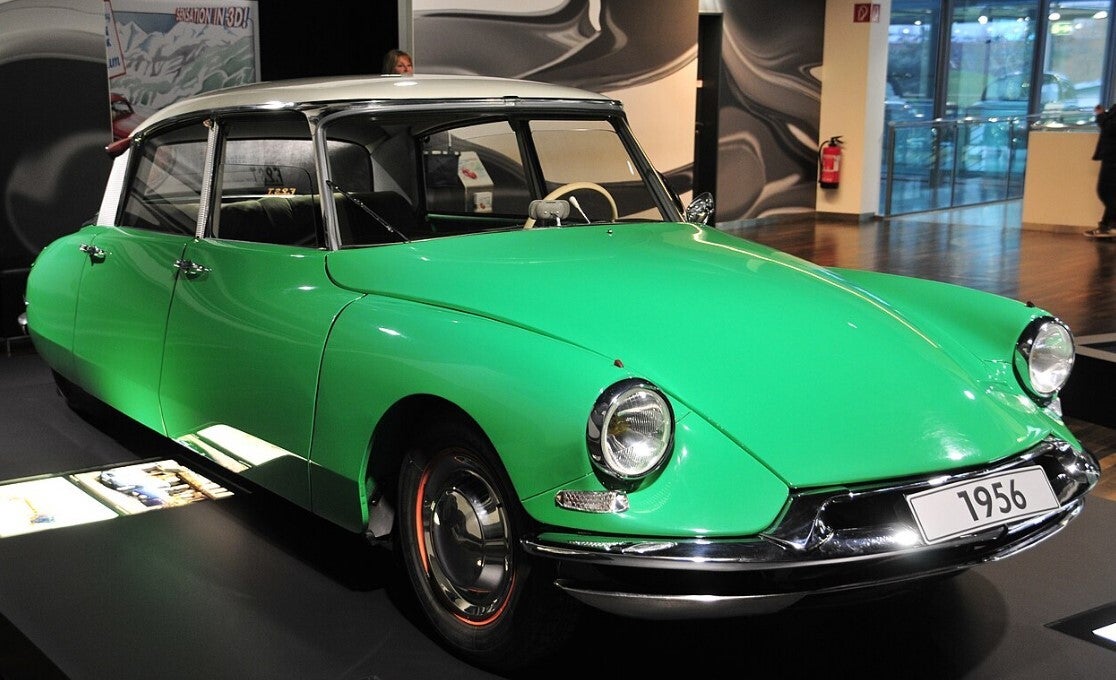
Management at CITROËN believed that the standard of living of the French and of Europeans was on the rise. The 2 CV had just been successfully launched on the market and a successor had to be found for the 15 and 11 CV. The VGD project (Large Series Car), the first designs of which dated back to 1945, began to take shape. André LEFEBVRE who is appointed manager of the project decides the car should be innovative throughout. The body was the art of Flaminio Bertoni and the suspension that of Paul Magès. As for the engine, Paul Bercot updated the design of the old 1911 cc D engine. At the end of 1954, the project is completed. In October 1955, the car made its debut at the 42nd Paris Motor Show. Most surprising about the car were its lines. The design was totally new. France was divided into two groups: those who liked it and those who didn‘t. But the bodywork was not the only novel feature. Hydropneumatic suspension brought unrivaled comfort with four wheel independent suspension. Plastic became an important element in the bodywork, the roof panel and rear window as well as the light alloys for the bonnet making use of plastics. There were also other new features: a single spoke steering wheel, tapered turn signals and doors without window frames.
---
Description du produit :
La direction de Citroën était convaincue que le niveau de vie des Français et des Européens était en hausse. La 2 CV venait d'être lancée avec succès et il fallait trouver un successeur aux 15 et 11 CV. Le projet VGD (Voiture de Grande Série), dont les premiers croquis remontaient à 1945, commença à prendre forme. André Lefebvre, nommé chef de projet, décida que la voiture devait être novatrice à tous les niveaux. La carrosserie était signée Flaminio Bertoni et la suspension, Paul Magès. Quant au moteur, Paul Bercot modernisa le vieux moteur D de 1911 cm³. Fin 1954, le projet était achevé. En octobre 1955, la voiture fut présentée au 42e Salon de l'automobile de Paris. Ses lignes surprirent le plus. Le design était totalement inédit. La France se divisa en deux camps : ceux qui l'appréciaient et ceux qui la détestaient. Mais la carrosserie n'était pas la seule nouveauté. La suspension hydropneumatique offrait un confort inégalé grâce à sa suspension indépendante aux quatre roues. Le plastique est devenu un élément important de la carrosserie : le toit, la lunette arrière et les jantes en alliage léger du capot étaient également en plastique. Parmi les autres nouveautés, on notait un volant monobranche, des clignotants effilés et des portes sans cadre de vitre.
---