ACADEMY H. M. K. : REF : AC13503 : 1:35 : German Pz.Kpfw.V Panther Ausf.D ("Operation Citadel" (Koursk))



ACADEMY REF
13503
Manufacter :
ACADEMY HOBBY MODEL KITS.
GTIN : 8809258925170.
Scale :
1:35
---
Le char Panther, officiellement Panzerkampfwagen V Panther (abrégé Pz.Kpfw. V) et désigné Sd.Kfz. 171 dans l'inventaire des munitions, est un char moyen allemand de la Seconde Guerre mondiale. Il fut utilisé sur la plupart des théâtres d'opérations européens de la mi-1943 à la fin du conflit en mai 1945.
Conçu pour contrer le char moyen soviétique T-34 et remplacer les Panzer III et Panzer IV, le Panther servit néanmoins aux côtés du Panzer IV et du plus lourd Tiger I jusqu'à la fin de la guerre. Équipé du même moteur Maybach V12 essence (690 ch) que le Tiger I, le Panther offrait une meilleure pénétration de canon, était plus léger et plus rapide, et se déplaçait mieux sur terrain accidenté. En contrepartie, son blindage latéral était plus faible, le rendant vulnérable aux tirs de flanc, et son obus explosif moins puissant. Le Panther s'avéra efficace en terrain découvert et lors des engagements à longue portée. Le Panther disposait d'une excellente puissance de feu, d'une protection et d'une mobilité remarquables, bien que les premières versions aient souffert de problèmes de fiabilité. Le Panther était bien moins coûteux à produire que le Tiger I. Des éléments clés de sa conception, tels que son blindage, sa transmission et sa boîte de vitesses finale, furent simplifiés afin d'améliorer les cadences de production et de pallier la pénurie de matières premières.
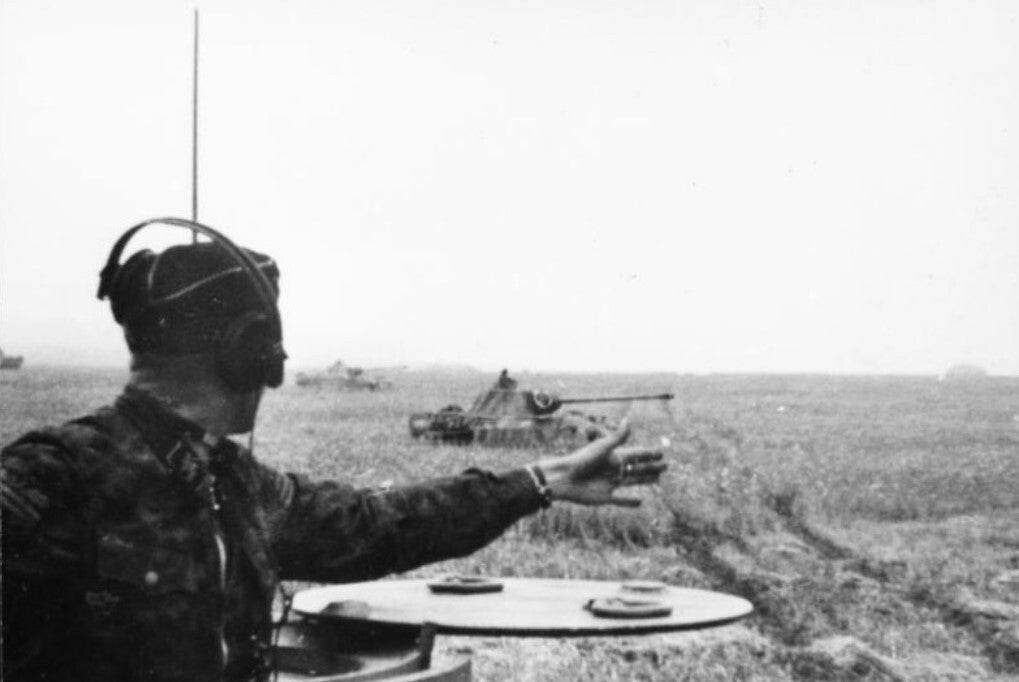
Le Panther fut engagé précipitamment au combat lors de la bataille de Koursk à l'été 1943 malgré de nombreux problèmes techniques non résolus, ce qui entraîna de lourdes pertes dues à des défaillances mécaniques. La plupart des défauts de conception furent corrigés entre fin 1943 et début 1944, mais les bombardements alliés des usines de production en Allemagne, la pénurie croissante d'alliages de haute qualité pour les composants critiques, le manque de carburant et d'espaces d'entraînement, ainsi que la baisse de niveau des équipages, affectèrent tous l'efficacité du char. Bien qu'officiellement classé comme char moyen, avec ses 44,8 tonnes, le Panther était plus proche en poids des chars lourds étrangers de l'époque. Le poids du Panther posa des problèmes logistiques, comme l'impossibilité de franchir certains ponts. Par ailleurs, le char possédait un rapport puissance/poids très élevé, ce qui lui conférait une grande mobilité.
Contrairement à la plupart des chars allemands, la désignation des variantes de production du Panther ne suivait pas l'ordre alphabétique : la variante initiale, le Panther « D » (Ausf. D), fut suivie des variantes « A » et « G ».
---
The Panther tank, officially Panzerkampfwagen V Panther (abbreviated Pz.Kpfw. V) with ordnance inventory designation: Sd.Kfz. 171, is a German medium tank of World War II. It was used in most European theatres of World War II from mid-1943 to the end of the war in May 1945.
The Panther was intended to counter the Soviet T-34 medium tank and to replace the Panzer III and Panzer IV. Nevertheless, it served alongside the Panzer IV and the heavier Tiger I until the end of the war. While having essentially the same Maybach V12 petrol (690 hp) engine as the Tiger I, the Panther had better gun penetration, was lighter and faster, and could traverse rough terrain better than the Tiger I. The trade-off was weaker side armour, which made it vulnerable to flanking fire, and a weaker high explosive shell. The Panther proved to be effective in open country and long-range engagements. The Panther had excellent firepower, protection and mobility, though early variants suffered from reliability issues. The Panther was far cheaper to produce than the Tiger I. Key elements of the Panther design, such as its armour, transmission, and final drive, were simplifications made to improve production rates and address raw material shortages.
The Panther was rushed into combat at the Battle of Kursk in the summer of 1943 despite numerous unresolved technical problems, leading to high losses due to mechanical failures. Most design flaws were rectified by late 1943 and early 1944, though the Allied bombing of production plants in Germany, increasing shortages of high-quality alloys for critical components, shortage of fuel and training space, and the declining quality of crews all impacted the tank's effectiveness. Though officially classified as a medium tank, at 44.8 metric tons the Panther was closer in weight to contemporary foreign heavy tanks. The Panther's weight caused logistical problems, such as an inability to cross certain bridges; otherwise, the tank had a very high power-to-weight ratio which made it highly mobile.
The naming of Panther production variants did not follow alphabetical order, unlike most German tanks – the initial variant, Panther "D" (Ausf. D), was followed by "A" and "G" variants.
---
Sources : Wikipedia.